
The Lake District’s ‘Atlantis’ is Revealed
23rd September 2014
The Lost Village of Mardale Green
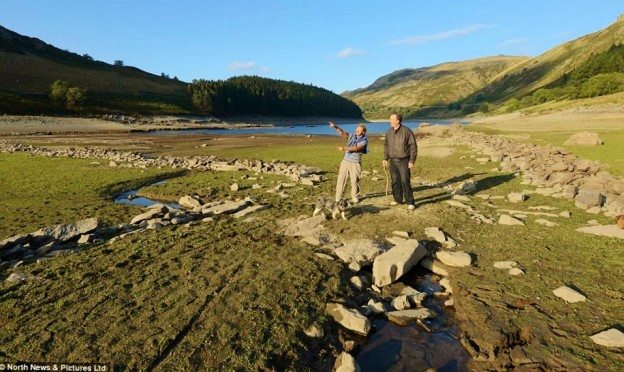
Periods of exceptionally dry weather in the Lake District can reveal one of Cumbria’s most fascinating hidden landmarks – the lost village of Mardale Green, which was submerged during the 1930s to create Haweswater Reservoir. As water levels fall, the remains of stone walls, old farm buildings, tree stumps and field boundaries occasionally emerge, offering a rare glimpse into a landscape that disappeared beneath the water almost a century ago.
Located in the peaceful eastern Lake District, Haweswater is renowned for its dramatic scenery, abundant wildlife and quieter walking routes. During prolonged dry spells, visitors may be fortunate enough to see traces of the former village that once occupied the valley floor, making it one of the area’s most intriguing historical sites.
The History of Mardale Green
To meet Manchester’s growing demand for drinking water, the valley was flooded during the 1930s as part of the construction of Haweswater Reservoir.
Homes, farm buildings, inns and the village church were carefully dismantled.
Graves were respectfully exhumed and reinterred in nearby cemeteries.
Despite widespread public opposition, the valley was permanently flooded, bringing an end to centuries of local history.
The loss of Mardale Green deeply affected many people, including renowned Lake District author Alfred Wainwright, who wrote:
“Mardale is still a noble valley. But man works with such clumsy hands! Gone forever are the quiet wooded bays and shingly shores that nature had fashioned so sweetly in the Haweswater of old.”
Visiting Haweswater Reservoir
Haweswater Reservoir is one of the Lake District’s most peaceful and unspoilt destinations. Surrounded by dramatic fells, it offers superb walking, wildlife watching and photography opportunities away from the busier lakes.
During periods of exceptionally low water, visitors may catch a rare glimpse of the remains of Mardale Green. However, even when the ruins remain hidden beneath the reservoir, Haweswater is well worth exploring for its spectacular scenery and rich history.
Although these appearances are relatively rare, they attract visitors from across the UK who come to witness this remarkable piece of Lake District history. Water levels can change quickly following periods of rainfall, so there is never any guarantee that the ruins will be visible.
For the latest reservoir information, visit the United Utilities Haweswater Reservoir website. You can also check the latest forecasts and rainfall statistics on the Met Office website before travelling.
Haweswater at a Glance
- Length: 6.7 km (4.2 miles)
- Max Depth: 57 metres (187 feet)
- Water Volume: Holds roughly 84 billion litres of water
- Dam Dimensions: 470 metres long and 27.5 metres high
- Water Elevation: Flooding raised the original lake’s water level by 29 metres
Whether the lost village is visible or not, Haweswater Reservoir remains one of the Lake District’s hidden gems, combining breathtaking scenery, fascinating history and some of the National Park’s most tranquil walking routes.